





Key takeaways
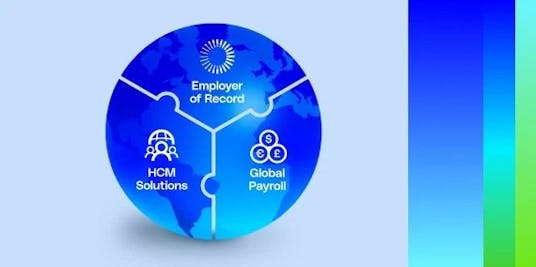
- EORs enable global hiring: An Employer of Record (EOR) lets you hire long-term employees globally without opening entities or handling benefits and local law compliance.
- Umbrella companies focus on payroll: An umbrella company acts as an intermediary for contractors, managing pay-as-you-earn (PAYE) taxes and invoicing within a single country.
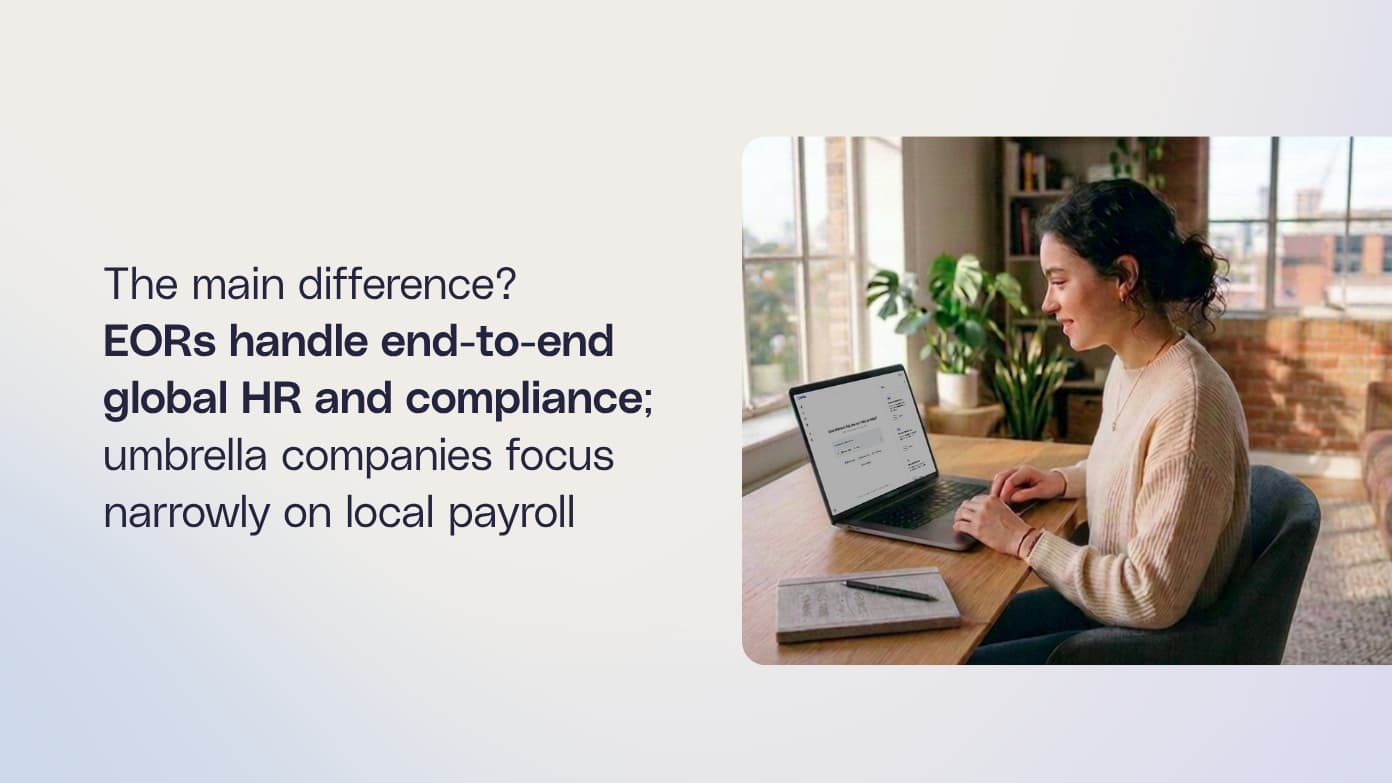
- The main difference is scope: EORs manage total end-to-end legal and employment risk across borders. Umbrella companies focus narrowly on payroll processing for temporary workers.
Balancing compliance with business priorities gets more complex as you grow into new markets and expand your team. Employers of record (EORs) and umbrella companies can simplify workforce management, but each has its own use case and advantages.
This guide will explain the differences in EOR vs umbrella company setups so you can find the right approach for your business.
What is an EOR?
An EOR acts as the legal employer on behalf of another company. An EOR lets you hire employees worldwide without establishing a local entity in each country.
While you retain control over the employees' day-to-day work, the EOR handles compliance, payroll, taxes, benefits, and other HR functions. Partnering with an EOR helps you:
- Hire employees anywhere in the world.
- Streamline payroll processes, tax withholdings, and benefits administration.
- Minimize compliance risks by entrusting regulatory adherence to an expert partner.
What is an umbrella company?
The meaning of umbrella company refers to an entity that facilitates contract work. Umbrella companies are also known as pay-as-you-earn (PAYE) umbrellas, meaning they use the PAYE system for deducting taxes. They're intermediary entities between companies and temporary employees or contractors.
An umbrella company is a legal employer, but only manages deductions and contributions and disperses payments from the company or agency to the contractor. Meanwhile, the company or agency remains responsible for overseeing work direction, managing expectations and deliverables, and ensuring compliance.
Key differences between EORs vs. umbrella companies
EORs and umbrella companies act as legal employers and intermediaries between companies and workers. Both can help with payroll, support compliance, and assume some employer responsibility. However, the scope of support and responsibility each approach offers is different:
- Scope of services: EORs streamline a full range of HR tasks, including onboarding, contracts, pay, and benefits. Umbrella companies focus on payroll processing and basic administrative tasks.
- Employment type: EORs focus on long-term employment, though some providers like G-P EOR™ also support contractors and temporary employees. Umbrella companies work with contractors and temporary employees.
- Compliance support: EORs provide comprehensive support for compliance with local employment laws. Umbrella companies support compliance in payroll, including taxes and contributions, but don't necessarily provide other legal support or services.
- Reach: EORs have global subsidiaries and in-country expertise to support compliant scaling to new locations. Umbrella companies have a narrower focus and limited international expertise, typically operating within a single country. They're common in the U.K. and France. In France, temporary employment contracts and the companies that facilitate them are regulated under the entreprise de portage salarial model.
- Control and flexibility: EORs offer access to global talent pools and hire the candidate you choose. Umbrella companies, often tied to recruitment firms, can limit access to talent and create a more distanced relationship.
- Risk mitigation: EORs manage all aspects of compliance. Umbrella companies leave more of a compliance burden on customers and give a narrower scope of support.
- Fee structure: Leading EORs, like G-P EOR, have a clear and predictable fee structure. G-P EOR pricing starts at USD 599 per month (per employee) and doesn’t charge a percentage of payroll. Understanding umbrella company fees can sometimes be more complex, which can impact the businesses and contractors that work with them.
| Feature | Employer of Record | Umbrella company |
|---|---|---|
| Scope of services | Employment contracts, onboarding, payroll, benefits, and local employment administration | Payroll, PAYE-style tax deductions, invoicing, payslips, and related employment administration for temporary assignments |
| Employment type | Commonly used for employees, including long-term or full-time hires | Commonly used for temporary, agency, or assignment-based workers |
| Compliance support | Supports broader local employment compliance but doesn’t eliminate all client risk | Supports payroll tax compliance and related employment administration. Broader employment and supply-chain risks can remain |
| Geographic reach | Multi-country or global coverage depending on the provider | Usually country- or market-specific |
| Talent access | Helps employ candidates selected by the client in supported countries, subject to local requirements | Don’t source workers. Works alongside recruitment or staffing agencies |
| Risk mitigation | Assumes many legal-employer responsibilities, with some client responsibilities retained | Handles payroll/employer administration for the assignment but agencies or end clients can retain legal, tax, and operational exposure |
| Fee structure | Often subscription-based or per-employee pricing. G-P EOR starts at USD 599 per month (per employee). | Includes an umbrella margin or administrative fee |
How does an umbrella company payroll work (PAYE-style)
Umbrella payroll can simplify payments for temporary workers or contractors while supporting pay-as-you-earn (PAYE) tax compliance, particularly in markets such as the UK. Here’s how the process works:
- You agree the engagement terms. You agree the worker’s assignment terms, rate, and project details with the umbrella company.
- The worker submits timesheets. The worker records their hours or days worked. The approved timesheet is then used to calculate the assignment payment.
- You receive an invoice. The umbrella company invoices for the worker’s time, along with any agreed margin or management fee.
- Payroll deductions are calculated. After payment is received, the umbrella company processes payroll.
- The worker gets paid. The umbrella company pays the worker their net pay and gives a payslip showing gross pay, deductions, and take-home pay.
Using PAYE umbrella payroll saves you time. You avoid the admin work of running a separate payroll for temporary staff, and you reduce the risk of costly misclassification penalties.
Is an umbrella company the same as a staffing agency?
No. While both work with temporary workers, they handle completely different parts of the process.
A staffing agency finds and places talent for your open roles. They source candidates, screen resumes, and match contractors to your specific project needs.
An umbrella company acts as a legal employer and payroll processor. They don’t recruit workers. Instead, they step in after you find a contractor and handle their payroll, tax deductions, and employment admin.
Understanding the distinction helps you build the right setup for your business:
| Feature | Staffing agency | Umbrella company |
|---|---|---|
| Primary focus | Sourcing and placing talent | Employing temporary workers and processing payroll/PAYE deductions |
| Recruitment support | Yes | No |
| Legal employer status | Varies (often places workers) | Often the worker’s employer in UK umbrella arrangements |
| When to use | You need help finding temporary workers or contractors | You’ve sourced the worker and need a compliant payroll/employment administration structure |
Pros and cons of using an umbrella company
An umbrella company can simplify contractor or temporary worker payments but it mightn’t suit every hiring situation. Weighing the pros and cons helps you decide if this model fits your current setup.
Pros
- Saves administrative time. You can avoid running payroll directly for temporary workers or managing PAYE tax and national insurance deductions yourself, depending on the structure.
- Reduces compliance risk. The umbrella company manages tax withholdings such as PAYE and national insurance contributions, lowering your risk of misclassification fees.
- Offers quick onboarding. You can help workers start and get paid quickly where the model is set up and compliant.
- Simplifies invoicing. You get a single invoice from the umbrella company rather than managing payments to multiple individual contractors.
Cons
- Limited legal and HR support. Umbrella companies focus mostly on payroll. They aren’t a substitute for support with long-term employment compliance, benefits strategy, immigration, workforce planning, or employee relations.
- Narrow geographical reach. Umbrella companies usually operate within a single country, making them less suitable for hiring a worldwide team.
- Higher fees for contractors. The umbrella company takes a service fee from the contractor's pay or adds fees to your invoice.
- Less control over worker experience. Adding an intermediary between you and your contractor can create distance and complicate communication.
Choosing between an EOR and an umbrella company
Given the differences when comparing EOR vs umbrella company options, the right choice for your company depends on your needs and priorities.
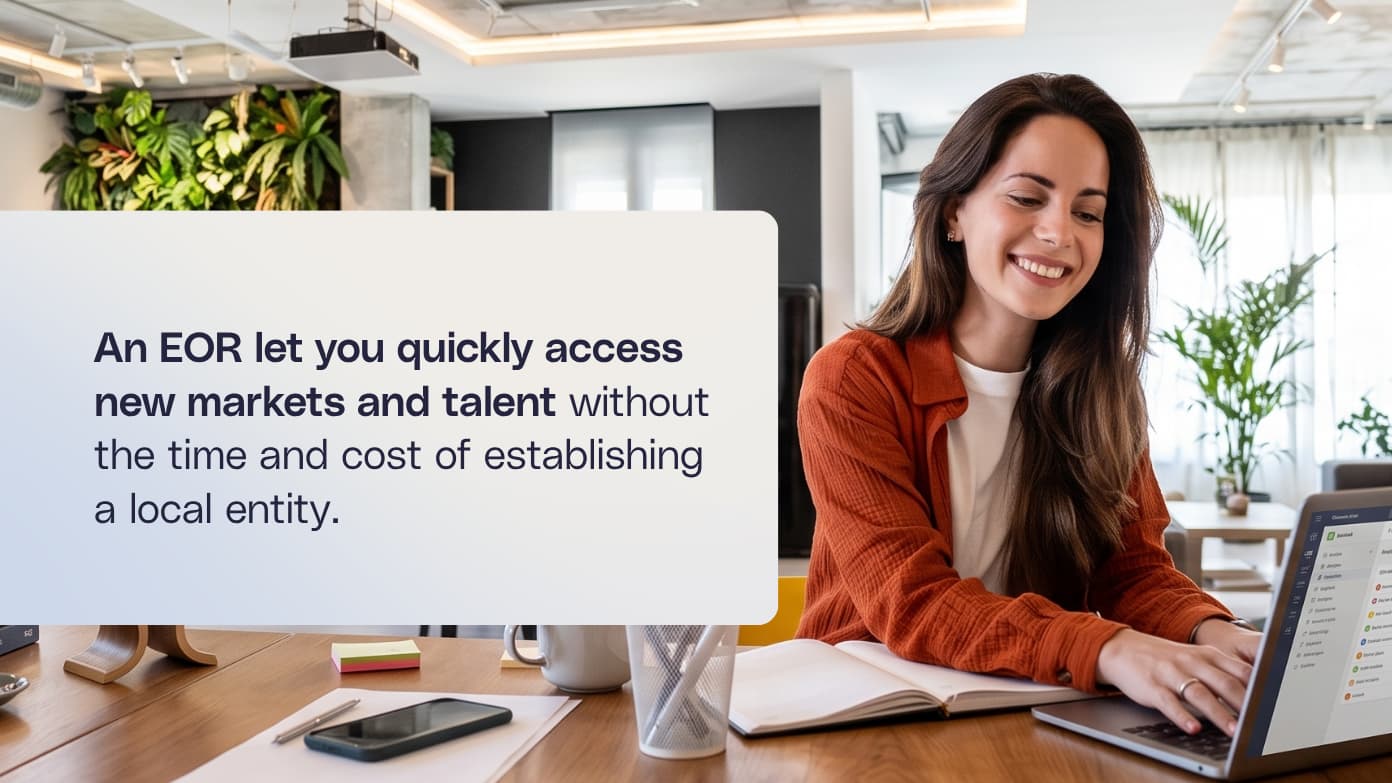
If you want to expand into a new market or build a distributed team, choose an EOR. EORs have the entity infrastructure and expertise to support compliant global hiring. An EOR lets you quickly access new markets and talent without the time and cost of establishing a local entity. You can also enjoy flexibility and compliance assurance while hiring and managing full-time employees, part-time employees, or contractors.
If you only want help with contractor payment in a location where you already have an entity, an umbrella company may meet your needs.
What to check before choosing an umbrella company
Choosing the right umbrella partner can help reduce payroll and supply-chain risk but it doesn’t eliminate liability.
Before you sign an agreement, check that the provider holds recognized industry accreditations and follows local tax laws. This verification can save you from unexpected payroll tax penalties down the road.
Next, look closely at how they charge. Transparent umbrella company fees and clear payment timelines ensure there are no hidden costs for fast transfers or contract setups. You should also confirm how quickly they pay your contractors after getting your invoice as delays can strain your relationship with top talent.
Finally, review their contract terms and insurance coverage. Make sure the provider offers reasonable notice periods and includes essential coverage, like public liability and professional indemnity insurance. Checking these details upfront ensures a hassle-free partnership and keeps your operations running seamlessly.
What to check before choosing an EOR
Finding the right EOR can help you scale into new global markets quickly and legally.
Start by asking whether the provider owns local entities in your target countries. EORs with owned local infrastructure can give you tighter data security, direct operational control, and faster onboarding times for your candidates.
Next, evaluate their compliance depth and pricing transparency. Look for providers, like G-P EOR, with in-country legal experts who build compliant contracts, handle local benefit packages, and safeguard your intellectual property. Make sure their fee structure is predictable so you avoid surprise onboarding charges, currency markups, or hidden termination fees down the road.
Finally, test the technology platform and the employee experience. Choose a provider with intuitive software that simplifies payroll administration, time tracking, and contract updates in one central dashboard. Strong localized support keeps your international hires engaged and supported from day one.
The growing demand for EORs
The World Economic Forum predicts that by 2030, digital jobs that can be performed remotely are expected to grow to over 90 million roles. As more work happens in digital spaces, distributed workforces are more feasible and common. At the same time, companies of all sizes are using EORs to scale their business to new global locations, without the cost and complexity of entity setup.
These factors drive the growing demand for EORs, which provide fast, flexible, and compliant solutions for global hiring and expansion.
Hire globally with G-P
As the recognized leader in global employment, G-P helps companies of all sizes hire, onboard, and manage global teams in 180+ countries. Our industry-leading global employment products and EOR solutions are backed by the largest team of in-country experts.
Contact us today to discover how we can help you hire anywhere, quickly and compliantly.
FAQs
What’s the difference between an umbrella company and a limited company?
An umbrella company engages contractors who take on temporary work, often through recruitment agencies. The umbrella company handles taxes and compliance in the payment process.
A limited company is a separate legal entity owned by at least one shareholder. A company or contractor can establish a limited company, giving them more control over their finances and business operations. They're responsible for managing their own taxes, accounting, and compliance with legal regulations. This structure is tax-efficient, but requires more administrative responsibility.
How do EORs and umbrella companies ensure worker classification?
An EOR acts as the legal employer and ensures compliance with local labor laws, including tax obligations and worker entitlements. Whether you're hiring an employee or a contractor, EORs mitigate worker misclassification risks.
Umbrella companies streamline payroll and tax deductions. Contractors engaged by an umbrella company work on a temporary or project basis for customer companies. This can simplify tax obligations for contractors and help keep distinctions between employees and contractors clear. But umbrella companies lack the expertise EORs have in worker classification regulations for employees and contractors, and can't offer the same level of guidance.
Does an EOR offer more benefits than an umbrella company?
Yes, an EOR can be more beneficial than an umbrella company if you want to scale globally without establishing a local entity. EORs ensure compliance with local labor laws and manage payroll, tax obligations, and employee benefits.
An EOR offers more stability and oversight than an umbrella company, which is for short-term contractor arrangements. Additionally, an EOR can be a strategic partner in jurisdictions with complex regulatory environments, reducing legal and financial risks.
How do EORs and umbrella companies streamline contract termination?
As the legal employer, EORs manage termination in strict compliance with local labor laws. This includes giving proper notice, managing severance pay, and meeting all legal requirements. Terminations are conducted fairly to protect both you and the worker.
Working with umbrella companies is often temporary or project-based, so termination and severance depend on the contract terms and local regulations.
What are the disadvantages of an umbrella company?
While umbrella companies help streamline relationships between businesses and contractors, they have significant limitations, such as:
HR support is mainly limited to payroll processing.
Businesses partnering with umbrella companies may be held accountable for the provider’s compliance errors.
Working with an umbrella company is less tax-efficient for the contractor than operating their own limited company.
Some umbrella companies are slow to pay or make excessive deductions from contractor payments.