






Key takeaways
- Reduce operational costs and risk: Closing redundant, inactive, or duplicative legal entities reduces expensive local director fees, annual audit obligations, complex tax filings, and legal exposures.
- Streamline before you shut down: Execute offboarding in four clear phases (portfolio assessment, workforce planning, financial cutover, and legal dissolution) to prevent lost tax attributes or compliance delays.
- Protect global talent via EOR: Avoid workforce disengagement and keep key international staff during entity closures by transferring them to an employer of record (EOR) like G-P.
- Prevent entity sprawl: Transitioning to a unified EOR model gives your HR, finance, and legal teams a scalable blueprint to test new markets or manage remote teams without creating low-utilization entities.
Years of growth and M&A can leave you with a web of complex legal entities. Over time, you accumulate subsidiaries, dormant companies, and overlapping registrations that no longer fit how you operate today.
Carrying these redundant entities drains your resources. They drive up audit fees, stack up administrative tasks, and increase your legal exposure. Even inactive entities still demand local directors, tax filings, bank maintenance, and corporate records.
A structured legal entity rationalization clears out this friction. By simplifying your corporate footprint, you can cut unnecessary costs, gain full visibility, and make faster, cleaner operational decisions.
This playbook gives you a clear strategy to work through offboarding. You’ll learn how to audit your portfolio, protect your employees, transition tax and payroll, and complete dissolution without risking compliance.
Understanding types of company legal structures
Your company's legal structure defines who owns your business, who controls it, and who takes on liability. It dictates how you pay taxes and how easily you can sell, merge, or close a unit.
When rationalizing your footprint, one distinction matters most: Does the structure create a separate legal person?
- Subsidiaries, corporations, and LLCs are separate legal entities. They can sign contracts, hire people, owe debts, and pay taxes independently from your parent company. This gives you strong liability protection, though it adds governance and reporting duties.
- Branches are extensions of your main company. They can be easier to open but they expose your parent company directly to local obligations and debts.
You can use holding companies to store IP, representative offices for early market entry, or joint ventures to share risk.
Executing an entity rationalization means asking: Does this entity still serve a clear purpose?
Having more entities means managing more bank accounts, tax filings, board seats, and intercompany contracts. Cutting redundant structures helps you cut costs, simplify compliance, and reduce risk. However, the goal is keeping the right entities to protect your assets, hold required licenses, and support local growth.
Common types of company legal structures
Selecting the right company legal structure determines how your business is taxed, managed, and protected from liability.
Sole proprietorship You own and run the business as an individual. It offers total control and simple employment rules but you take on unlimited personal liability for all business debts and workforce obligations.
Partnership You share ownership and management with one or more partners. You share personal liability for debts, unless you set up a limited partnership. The partnership itself has to handle labor law compliance for any staff you hire.
Limited Liability Company (LLC) You get the liability protection of a corporation paired with the tax flexibility of a partnership. Your personal assets stay shielded from business debts, though you have to follow formal employment laws and HR rules.
Corporation (C-Corp / S-Corp) Your business acts as a completely separate legal entity, giving you the strongest liability shield. C-Corps pay tax at the corporate level, while S-Corps pass profits straight to your personal tax return. They demand the highest level of HR management, including structured payroll, benefits, and statutory compliance.
Key decision factors
Choosing the right business structure comes down to balancing four factors.
1. Liability
Sole proprietorships and general partnerships leave your personal assets exposed to business debts and lawsuits. LLCs and corporations build a wall between your personal wealth and the business. Personal guarantees, fraud, or mixing funds can tear that wall down.
2. Taxes
How you structure determines how (and how often) you pay tax. Pass-through entities (sole proprietorships, partnerships, and S-Corps) send profits straight to your personal tax return. C-Corps pay corporate tax directly, which can trigger double taxation when you pay out dividends. LLCs give you the choice to pick the tax model that suits you best.
3. Control and governance
As a sole proprietor, you call all the shots with zero admin. Partnerships need clear contracts to prevent internal fights. LLCs let you choose between owner- or manager-led control, while corporations need strict formal governance. This includes boards, bylaws, and mandatory records.
4. Growth potential
Sole proprietorships rarely scale well. Partnerships can grow but splitting ownership gets messy fast. LLCs balance flexible growth with solid asset protection. If you plan to raise venture capital, issue stock, or go public, a C-Corp is the preferred setup for investors.
How this drives rationalization
These four factors explain why a specific entity exists, or why you need to eliminate it. If an entity no longer shields you from liability, optimizes your tax, grants vital control, or fuels growth, it’s adding unnecessary cost and compliance overhead.
The 4 strategic phases of legal entity rationalization
Executing a legal entity rationalization needs a structured, four-phase approach to protect your tax, workforce, financial, and legal standing.
Phase 1: Portfolio assessment and tax planning
Map what you own, why it exists, and its standing. Build a complete inventory of ownership, board seats, bank accounts, licenses, and contracts. Have your tax team evaluate operating losses, transfer pricing, tax attributes, and election options before taking action.
Phase 2: Workforce and labor management
Handle this early. Employee consultation rules can delay your shutdown timeline if missed. Identify all affected staff, contracts, union or works council duties, notice periods, and visa sponsorships to ensure smooth transfers and prevent litigation.
Phase 3: Financial cutover and system integration
Turn your strategy into action. Align payroll, accounting ledgers, bank accounts, and vendor contracts. Reconcile year-to-date pay, tax withholdings, and benefits between old and new entities so employees suffer no payroll interruptions.
Phase 4: Legal dissolution and record archiving
Formally close the business. Secure board approvals, file liquidation papers, deregister for tax, cancel licenses, and close bank accounts. Store all final corporate, payroll, and tax records in a central archive for future audit protection.
The essential legal entity rationalization checklist
Successfully completing a legal entity rationalization requires a checklist to make sure compliance and avoid costly missteps.
Governance audit
Confirm ownership chains, director roles, active contracts, and bank accounts before doing anything else. This prevents you from dissolving an entity that still holds key assets, active licenses, or unresolved liabilities.
Tax alignment
Map your tax strategy early. Changing your structure in the wrong order can wipe out valuable tax attributes. Check operating losses, intercompany balances, VAT/GST status, and local tax clearance rules before you proceed.
Employee mapping
Protect your team and avoid legal pitfalls. Identify every employee, contractor, visa-sponsored worker, and union member tied to the entity. Moving or closing roles triggers local notice periods, severance rules, benefit transitions, and visa updates that you have to address early.
Contract alignment
Keep your business moving smoothly. Review vendor, lease, customer, and intercompany agreements to see if you need to assign, terminate, or rewrite them. Use transfer agreements for moving employees to protect their tenure, benefits, and service continuity.
Financial cutover
Reconcile all financial accounts before shutting down payroll registrations. Double-check year-to-date pay, tax withholdings, PTO accruals, and intercompany debt. Update your HRIS, ERP, and banking systems at the same time to prevent orphaned records.
Legal deregistration
Before submitting your final dissolution papers, confirm that all staff have transferred, debts are cleared, tax authorities have approved, licenses are cancelled, and bank accounts are closed.
How an EOR can optimize your entity rationalization plans
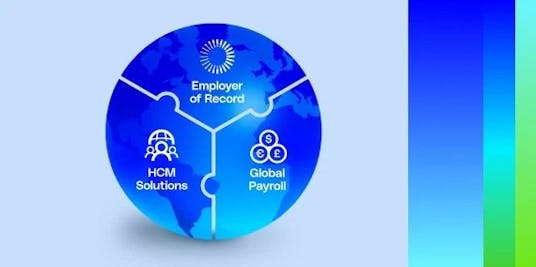
An employer of record (EOR) gives you a compliant way to employ local staff without keeping a dedicated legal entity. Instead of keeping a costly subsidiary open for a few workers, you can transfer your team to an EOR. This instantly sheds local payroll, tax filings, bank maintenance, and governance duties.
Key operational benefits
- Bridge phased rationalization: You don't need to wait on complex entity shutdowns to move forward. Transition your staff to an EOR first, then proceed with tax clearance, contract closures, and final deregistration at your own pace.
- Protect core talent: The EOR handles local HR contracts, statutory benefits, and payroll compliance as the legal employer, while you keep full direction over day-to-day work.
- Minimize workforce disruption: Transferring through an EOR simplifies local severance, complex consultation rules, visa updates, and benefits continuity — keeping employee transitions smooth and compliant.
- Prevent future entity sprawl: When entering or testing new markets, an EOR lets you hire local talent without adding another entity to your corporate tree.
Retaining global talent during entity closures with G-P
Losing top talent is a main risk during entity rationalization. When news of a closure breaks, your employees can assume their jobs are ending. This can trigger unwanted resignations and disengagement before your transition plan is even finalized.
G-P's Global Employment Platform helps you retain important international team members without keeping a costly legal entity open.
How G-P simplifies your workforce transition
- Preserve key employees: If an entity exists mostly to support a small team, you can transfer eligible staff to G-P. G-P acts as the local legal employer — handling contracts, payroll, benefits, and HR — while you continue directing their daily work.
- Protect seniority and service continuity: Tripartite agreements document the transition smoothly. Where local laws allow, you can preserve original hire dates, tenure, and benefit structures to give your employees peace of mind.
- Standardize across 180+ countries: G-P uses its own wholly owned entities worldwide. You get a single, consistent employment model instead of juggling multiple underused subsidiaries.
- Accelerate regulatory answers: G-P Gia™ delivers fast, expert-vetted HR guidance across 50 countries. You can quickly map out notice periods, severance rules, immigration impacts, and required consultation steps.
Transitioning your team to G-P gives your legal, tax, and finance groups a clear path to complete deregistration, clear tax liabilities, and simplify your corporate structure.
““The quick response and agility from the G-P team proved instrumental in transitioning our employees within an exceptionally tight time frame. G-P enabled us to retain key talent, oversee the closure of our Canadian entity, and ensure compliance with all legal and financial obligations, allowing us to concentrate on business operations.” — Nick Cheesman, Head of HR North America at Repsol.
Key recommendations for executive decision-makers
Decision-makers have to connect HR, finance, and legal strategies to make sure there’s a smooth, cost-effective, and compliant transition.
HR leaders: prioritize continuity and clear communication
Uncertainty during entity closures drives attrition, disengagement, and benefit gaps.
- Map roles early: Identify affected staff and confirm if you can preserve their original hire dates and tenure.
- Seamless transitions: Coordinate benefit structures so employees experience zero coverage interruptions.
- Clear messaging: Communicate directly with staff to explain exactly what changes and what stays the same.
Finance leaders: run a total cost analysis
Compare the ongoing cost of running local entities against transitioning eligible staff to an EOR.
- Account for hidden friction: Factor in local director fees, statutory audits, tax filings, bank account maintenance, and internal governance time.
- Build the business case: Measure direct financial savings alongside operational simplicity and faster market exits.
Legal leaders: manage risk and compliant execution
Make sure the transition protects your business and meets local regulations.
- Validate EOR fit: Confirm the EOR model complies with local laws in each jurisdiction.
- Audit contractual terms: Review transfer mechanics, notice periods, and consultation duties before moving staff.
- Secure key IP and data: Tighten restrictive covenants, IP ownership terms, data privacy clauses, and indemnity terms before execution.
Accelerate your global growth strategy
Streamlining your legal structure builds operational agility. Entity rationalization cleans up your footprint, making future expansion, restructuring, and workforce planning faster and easier to manage.
Partnering with G-P helps you transition eligible employees while preserving payroll, benefits, and local HR compliance. You get to keep top global talent without the heavy burden of keeping low-utilization legal entities open just to run payroll.
Why partner with G-P?
- Keep key talent: Keep your key team members in place without interruption to their daily work or pay.
- Cut administrative overhead: Reduce recurring costs for local board seats, bank accounts, tax filings, and audit fees.
- Grow with confidence: Turn a complex offboarding process into a lean, agile platform built for long-term global growth.
Book a demo to see how our Global Employment Platform can streamline your entity rationalization strategy.
 Frequently asked questions
What is legal entity rationalization?
Legal entity rationalization is the process of reviewing and streamlining an organization's legal structure. It removes redundant entities to reduce compliance costs and operational risk.
Why do companies simplify their company legal structure?
Companies simplify structures to cut administrative costs, improve tax efficiency, and prepare for M&A integration.
How does an EOR support entity rationalization?
An EOR lets you keep international team members without managing a local legal entity. G-P acts as the legal employer while you manage day-to-day work.
What should be on a legal entity rationalization checklist?
A complete checklist includes tax attribute reviews, employee contract alignments, IT system cutovers, and final legal dissolutions.
How can HR leaders protect employee seniority during entity closure?
HR teams can use tri-party agreements to recognize original hire dates and preserve statutory benefits.